
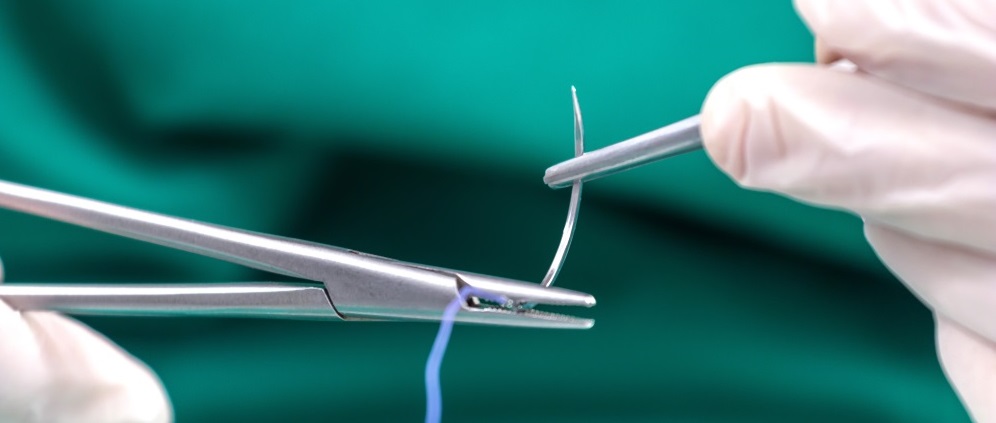
This resource has been developed to enhance knowledge for all who care for women during childbirth about the impact of perineal trauma and how this can be reduced.
When you have completed this course you will be able to:
- understand the impact of perineal trauma for women and birthing people
- understand the risk factors for perineal trauma and how to reduce the impact once trauma has occurred
- understand the theory of perineal repair, including regional anatomy, basic surgical skills, identification and classification of perineal trauma, the continuous technique, episiotomy repair and postnatal care
- understand how you can apply your theoretical knowledge and practice perineal repair on a simulator before going on to assess your skills in a workplace-based assessment.
Kathy Parsons (2026)
Matthew Parsons (2026)
Jennifer Prescot (2026)
Sara Webb (2026)
Katie Morris (2026)
Rebecca Man (2026)
Christine Kettle (2012)
Kathy Parsons RM
Specialist Perineal Trauma and Pelvic Health Midwife at Birmingham Women's and Children's NHS Foundation Trust.
Matthew Parsons MD FRCOG
Consultant Obstetrician and Gynaecologist (Clinical Lead for Perineal Trauma and OASI) at Birmingham Women's and Children's NHS Foundation Trust.
Jennifer Prescot RM
Specialist Perineal Midwife at South Warwickshire University NHS Foundation Trust, part of the Coventry and Warwickshire perinatal pelvic health service. Previously worked at University Hospitals Birmingham, part of the Birmingham and Solihull perinatal pelvic health service.
Sara Webb
Specialist Perineal Midwife and Head of Midwifery Information and Research Services at the Royal College of Midwives (RCM).
Katie Morris FRCOG
Professor of obstetrics and maternal fetal medicine. Honorary consultant, Birmingham Women's Hospital.
Rebecca Man
Clinical research fellow and ST3 obstetrics and gynaecology resident doctor.
Professor Christine Kettle
Professor Emerita of Women’s Health at Staffordshire University.
RCOG core curriculum matrix requirements/CiPs
- Competency in perineal repair (end of ST2)
- CiP 1: The doctor is able to apply medical knowledge, clinical skills and professional values for the provision of high quality and safe patient-centred care.
- CiP 2: The doctor is able to work effectively within health organisations.
- CiP 10: The doctor is competent in recognising, assessing and managing emergencies in obstetrics.
- CiP 12: The doctor is competent in recognising, assessing and managing non-emergency obstetrics care.
Standards of proficiency for midwives
- 6.43 demonstrate the ability to avoid and minimise trauma
- 6.57.9 perineal/labial/vaginal/cervical/anal trauma, and the need for suturing
- 6.60.2 vital signs and physical assessment including uterine involution and perineal health and wellbeing
- 6.65.5 suture an episiotomy, undertake repair of 1st and 2nd degree perineal tears as necessary, and refer if additional trauma has occurred
- 6.75.3 support and care for women with perineal/labial/vaginal/cervical/anal trauma including female genital mutilation
Product Details:
Product Name
Price
Perineal assessment and repair (MaternityPEARLS) - 12 Month Access
£64.80
Login to purchase
| Product Name | Price | |
| Perineal assessment and repair (MaternityPEARLS) - 12 Month Access | £64.80 | Login to purchase |